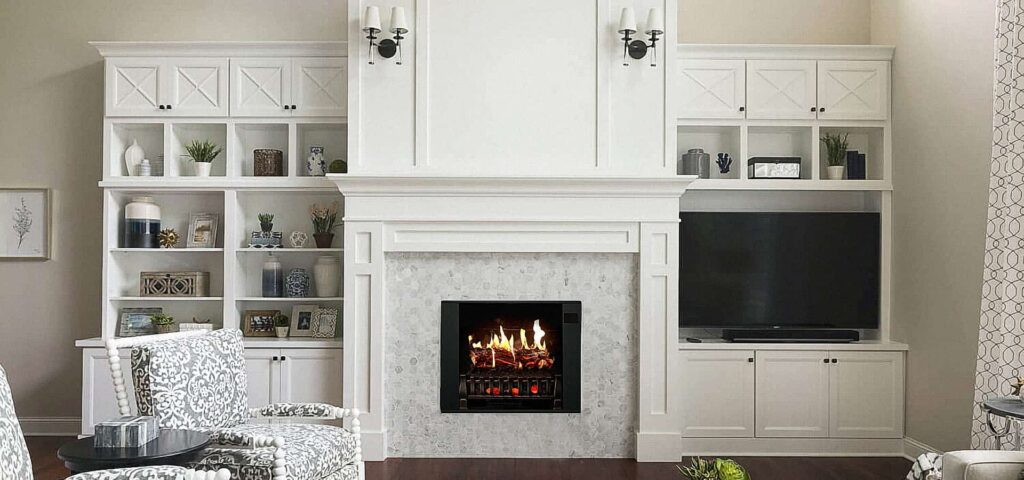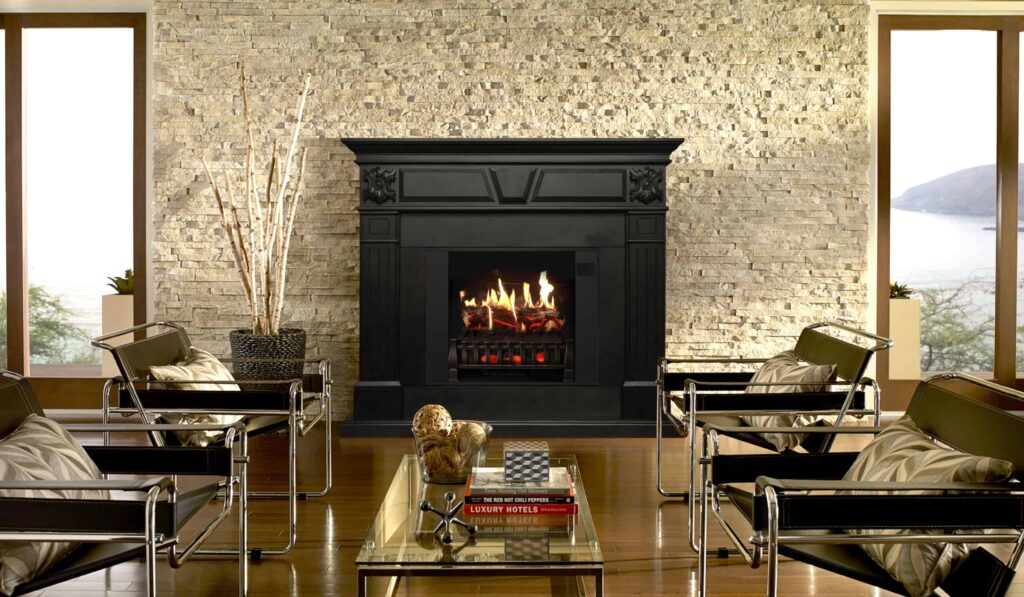




So, can you put a TV above your electric fireplace with infrared heater? In short, yes. For most electric fireplaces, it is perfectly safe to use a TV wall mount to hang a TV above your fireplace.
The an example of a time that isn’t good for your TV is if the heat is blown directly upward. For most models, this isn’t a problem as the heat vents aren’t usually located on the top of the unit. If you have a cheaper unit with vents on top, this can affect your picture quality and cause damage to your flat-screen TV. In comparison, gas fireplaces can produce intense heat that may damage your TV. Electric fireplaces, with their controlled heat output, are safer for mounting a TV above them.
When mounting a TV above any fireplace, it is crucial to consider the heat source to avoid potential damage to the TV.
Now, let’s say you want to hang your wall-mounted LCD TV above the electric fireplace that you bought. How high should you hang it? You don’t want to hang it too high. The hot air from gas or wood fireplaces can affect electronic devices, so maintaining a safe distance is important.
You want the focal point to be pretty much at eye level. The height at which you can hang your TV also depends on how far away the couch is from the wall. Protecting the TV’s electronic components from heat is essential to prevent damage.
If your couch is close, and you hang your TV too high, it will be like if you chose to watch TV sitting in the front row of a movie theater. This kind of viewing angle will cause neck strain. For comfortable viewing, mount the TV just a few inches over the mantle of your modern electric fireplace and make sure your couch is a comfortable distance away from the screen. Electric fireplaces have a lower heat output compared to wood burning fireplaces, making them a better option for mounting a TV above.
Do electric fireplaces ruin TVs?
Heat is a significant concern when it comes to keeping your TV and other electronics safe. This is why an electric fireplace is such a good option for your home. There are very strict clearance issues when working with gas fireplaces that can limit your decorating options when placing the TV nearby. Clearance isn’t an issue when dealing with electric units. These fireplaces that use gas tend to heat up the surrounding wall while electric versions stay cool. Gas also produces a large quantity of heat that is vented out of the front of the fireplace. Even when the heater in an electric unit is being used, the actual heat is much less intense. Much of this holds true for a gas or wood fireplace as well, as they emit intense heat from all angles, causing the walls and anything nearby to heat up. You don’t want your TV mounted on these heated walls.
Do electric fireplaces ruin TVs? In general, no, they don’t. However, you may be concerned if your fireplace is an older model or if it is a cheaper wall mount that blows the heat from the top of the unit. Modern high-quality electric fireplaces emit heat safely from the front of the unit. Today’s fireplace manufacturers understand current needs when it comes to TVs and decorating. They avoid outdated methods that could jeopardize your electronics regarding TV placement.
How the heater works in your electric fireplace
Most electric units can heat an area up to 400 square feet, although some have a heat output that can handle larger areas up to 1,000 square feet. While this heat level is excellent when it comes to staying warm, you may not want to hang your TV directly above it. Some leading TV manufacturers like Samsung, Vizio, or Sony may state that your warranty won’t cover heat damage.
You can measure the amount of heat that any heater provides with a measurement called a BTU. The more BTUs, the more heat you will have. For example, a 110-volt, 4,600 BTU heater will easily warm 400 square feet, but a 220-volt, 9,600 BTU heater can heat 800 square feet.
There are two main types of heaters used in constructing a fireplace. Understanding the difference can further help you avoid damaging the TV.
Fan-forced heat
Fan-forced heat is the traditional design found in these pieces. They are perfect as supplemental heat to your HVAC system with an ability to warm 400 square feet—the circulating fan inside forces air through heated coils and then out into the room.
Infrared heat
Infrared heaters can warm larger areas up to 1,000 square feet. The infrared heater warms the items in your room, such as furniture and drapes, similar to how the sun’s rays warm objects. They do this in addition to warming the air. This is possible with quartz infrared technology combined with a copper heat exchanger and fan. These units distribute heat evenly, and they are highly efficient.
Electric fireplaces are designed to be used as a supplement to your main heat source. They won’t heat your room all on their own in the middle of the winter season, but they do help take the chill off. You can lower your thermostat on your whole home HVAC system and use the fireplace to warm the room you spend the most time in. This can help you save money on your heating costs because you won’t be paying to keep every room extra warm, even if you aren’t in there. In addition, using the infrared fireplace as a supplement won’t require intense heat. So, if you want to watch the TV over the fireplace, you can use the heater in that fireplace to keep you comfortable without worrying about damaging the TV.

Where to put the TV
When it comes to avoiding heat damage, where you place your TV is essential. Decorating with a TV and fireplace in the living room can be quite a challenge. For this discussion, we are going to assume the fireplace is electric. In this case, you can easily put the television beside or above the fireplace. You might even consider placing them across from each other to ensure you are avoiding heat damage and protecting your warranty.
The main objective is to avoid creating a layout where the two pieces compete for your attention. You want to comfortably view your flat-screen TV while still enjoying the look of the fireplace.
Positioning the TV above the fireplace is the most popular design trend. If done properly, the size of the television will complement the scale of your fireplace. Your finished result is a balanced look in the room. Creating this single focal point in the living room simplifies the rest of the furnishings layout.
The only downside is that your TV is no longer at eye level. You can be left feeling as though you are in the front row of a movie theater. After sitting through an entire movie, you will have a sore neck. Fortunately, the viewing angle can be fixed by using an adjustable TV wall mount. There are two kinds of wall mounts available.
Tilting mounts
A tiling mount allows you to position the TV at a downward angle so you can comfortably watch while avoiding neck strain. When the television is off, it can be placed back against the wall in its original position.
Full-motion mount
A full-motion mount tilts and swivels. You will find an extension that you can use to pull the TV out from the wall and turn or tilt it however you like to get the best picture quality. The TV goes back up against the wall when you are done watching.
Heat and electronics don’t mix
Heat is not a TV’s best friend. High temperatures can affect the delicate electronics that provide you with that crystal-clear image you love. This is why it isn’t always a good idea to mount the TV above a gas or wood-burning fireplace with high heat output.
The wall above the fireplace is often warmer than any other surface in the room. This is due to the amount of heat a fireplace generates. For example, a gas fireplace generates 20,000 to 35,000 BTUs of heat per hour. To understand how much heat this is, consider how a 15,000 BTU heater will easily heat a 1,400-square-foot home during the winter months.[1]
A blower is designed to force the hot air into the room, but even a fireplace with a good blower tends to have hot air that rises above it. This doesn’t mean you have to eliminate the idea of placing your TV above the fireplace.
There are many factors to consider before making your final decision. For example, the depth of the fireplace mantel could make a difference. A narrow mantel allows the heat to go straight up. A deeper mantel helps shield anything above the fireplace from the intense heat. You also need to realize that some types of fireplaces produce less heat than others or include a higher-quality blower.
There are also electric fireplace inserts available. These are a great option if you want your TV to be mounted above the fireplace. Is it safe to put a TV above an electric fireplace? Yes, it is. These units produce less heat than a gas or wood fireplace. This is because the flames are not real. The flame effects are artificially created for the ambiance. Some include a heater to add to the realism of the piece, but those with heat are typically around 5,200 BTUs.
Electric units are so compatible with a TV that some are specifically designed to hold the TV. They have a mantel created for flat-screen televisions along with shelves for the cable box, DVD player, and other equipment. The heaters in these versions generally produce a low level of heat in order to protect the electronics.
Test the wall temperature
Regardless of what type of fireplace with a tv stand you have, the best way to know for sure if you can place the TV above it is to test the wall’s temperature. This is easy to do. Decide exactly where the TV will be mounted. Tape a thermometer where the center of the TV would be on the wall. Let the fireplace run for several hours. If the wall temperature is 100 degrees Fahrenheit or more, this area is too hot for the TV. Anything below 100 degrees is acceptable for your electronics.
TV damage from excessive heat
Large flat-screen TVs are expensive. The manufacturer’s warranty protects your investment. The last thing you want to do is call a repairman to come look at your new TV because it suddenly doesn’t function properly due to heat damage. If the repairman determines that excessive heat is the cause of your television’s damage and poor picture quality, the manufacturer may refuse to cover the cost of the repairs. Read the fine print. Many warranties state that a TV wall mount above the fireplace voids all coverage.
TV-friendly features of an electric unit
Is it safe to put a TV above an electric fireplace in the bedroom? In addition to a safer heat level than a gas or wood-burning fireplace, electric versions often incorporate features that make it easy to have your television above it.
Media mantels provide plenty of room for your Samsung TV to sit on top. They have storage for the cable box and other equipment underneath the mantel. A hidden door can be opened to reveal these devices while watching TV. When you are finished, you can close the door for a beautiful, clutter-free look.
Console fireplaces are stylish entertainment centers that include the look and feel of a real fire. They have ample room for a TV on top with plenty of shelving for equipment, DVDs, and Blu-ray. You can choose from open designs that allow you to see all your electronics, totally concealed options with doors to hide everything, or elegant pieces with beautiful glass doors.